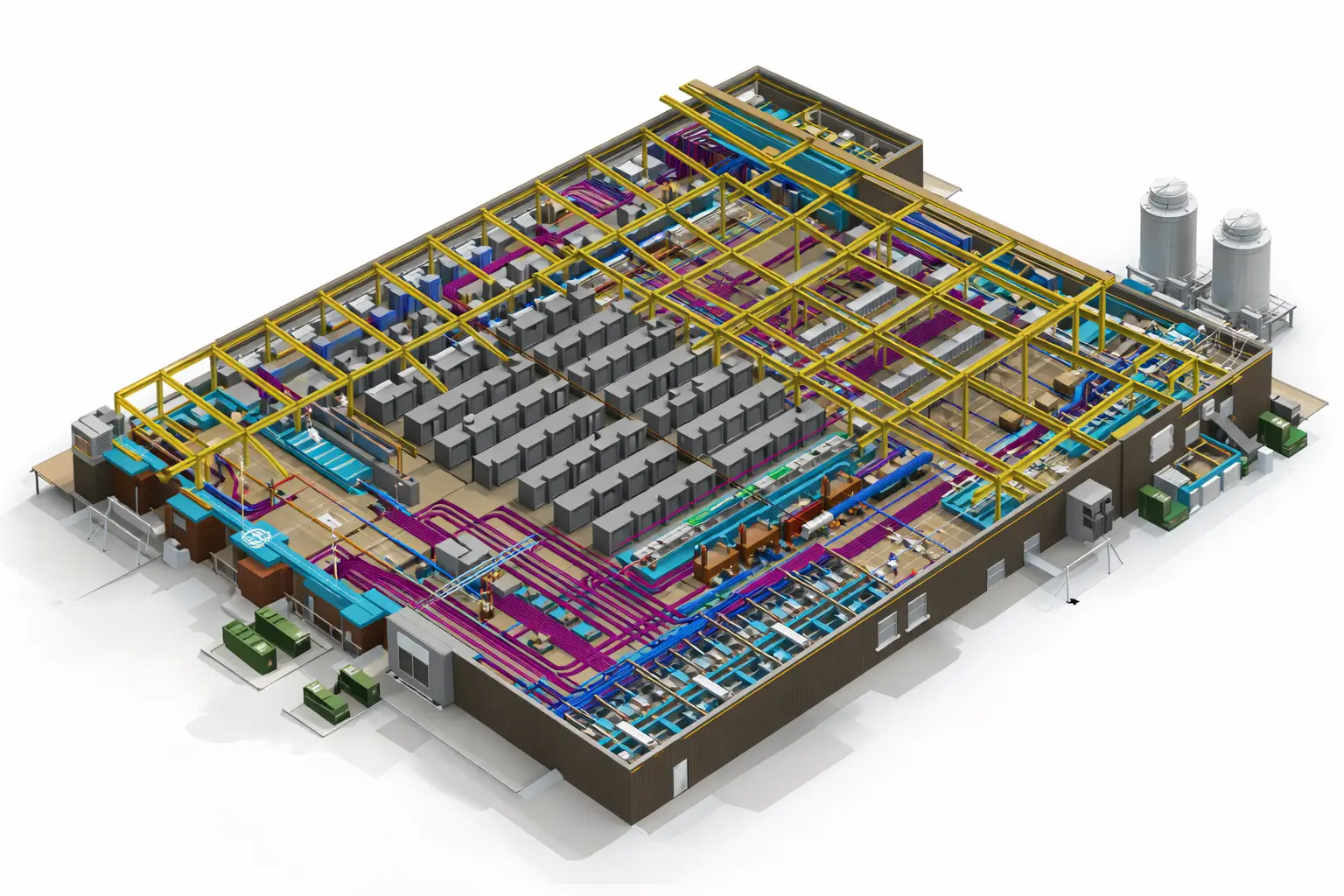
Data Center BIM, coordinated to the standard the field actually builds from.
LOD 400 fabrication-ready coordination on mission-critical data centers. Hangers placed, insulation wrapped, service clearances verified, downstream fabrication constraints preserved. The kind of model your subs can build from without re-engineering it.
How do we stop coordination models from ending up in the trash?
On a data center build, the answer is not more clash reports. The answer is a model the field trusts. That means hangers in the right place, beam pockets sized for the actual sleeve, insulation that does not collide with the cable tray six inches above it, and service clearances that match what the equipment vendor sent in the submittal.
Most coordination ends at LOD 350. The model is clash-free on screen and useless in the field. Crews stop opening it by week three. By week six, the coordination work has to be redone in the trailer, on paper, by someone who has never seen the model. That is what failure looks like.
We do not deliver coordination that gets thrown away. That is the whole point.
How much does one missed clash actually cost?
Most teams quote $5K to $10K per clash in the field. On a data center, that number is wrong. The real range is $50,000 to $200,000 per clash, sometimes more. Here is why.
$50K
Caught before steel is ordered
Modify the model, reissue the sleeve drawings, no schedule hit. The cost is the engineering hour and the QA rerun.
$100K+
Caught in fabrication
Spool sheets rebuilt, fabrication slot rebooked, shipping delayed. You eat the rework and the schedule.
$200K+
Caught in the field
Cut a wall, reroute, recoat, retest. On a mission-critical build with a hard go-live, that delay compounds across every trade behind you.
LOD 400 coordination is not a luxury on a data center. One clash caught before steel orders close pays for the entire engagement. Three caught pays for the whole job. The question is not whether you can afford fabrication-ready coordination. It is whether you can afford not to.
What does LOD 400 actually buy you?
LOD 350 says the pipe is in the right place. LOD 400 says the pipe is in the right place with the right hanger, at the right elevation, with the right insulation wrap, and the right service clearance for the equipment that has not landed on site yet. That is what the field needs.
Coordination on the projects that cannot tolerate rework.
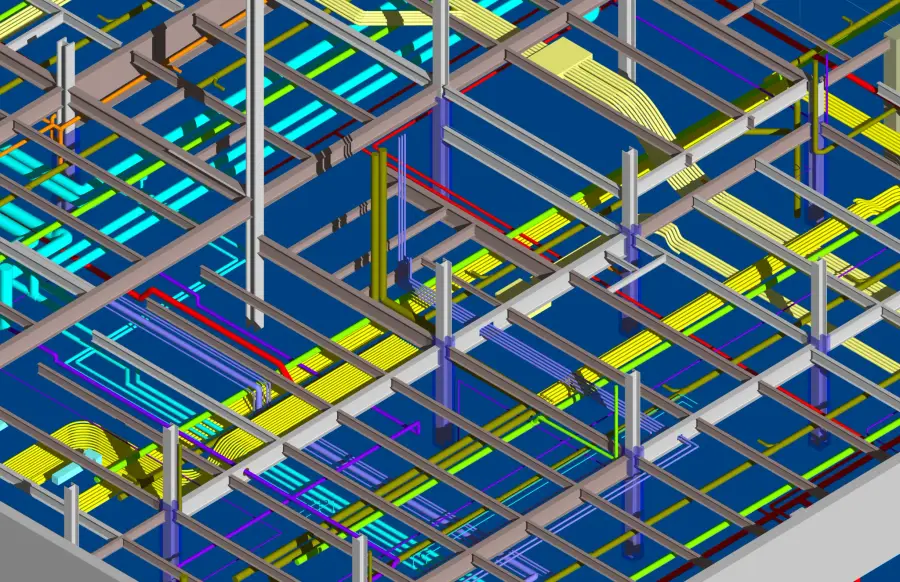
$300M+ facility. South Jordan, UT.
Multi-platform coordination across Tekla, Revit, and Navisworks. Intense multi-trade MEP with field BIM QA/QC. The model went to the field. The field used it. That was the only metric that mattered.
- Multi-trade coordination at scale
- Field BIM QA/QC on installed work
- Fabrication-ready deliverables across trades
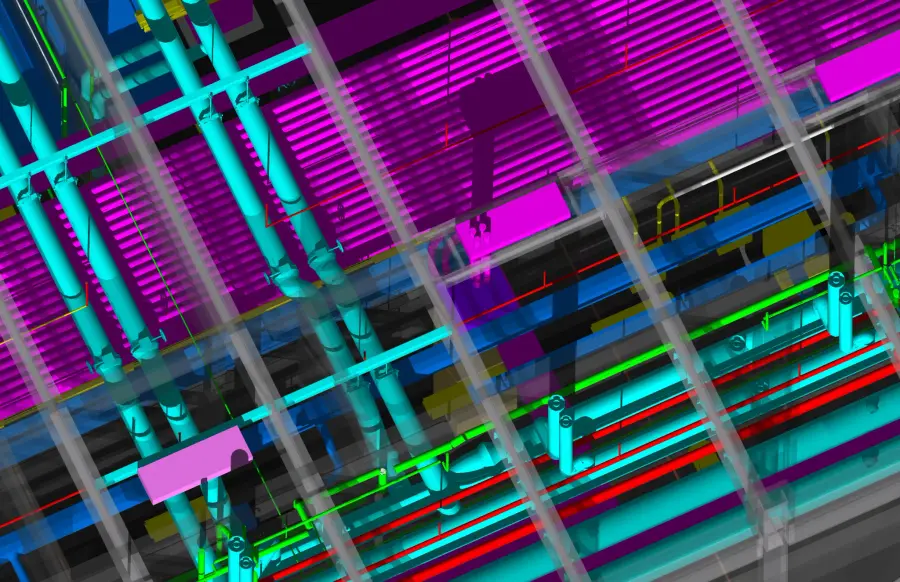
Confidential. Utah. Zero tolerance.
One of the most complex and security-sensitive data center builds in US history. Coordination ran against a hard go-live with no rework budget. The model had to be right the first time, every time.
- Zero tolerance for field conflicts
- Security-sensitive workflows
- Hard go-live with no schedule float
Plus IM Flash semiconductor coordination and other complex builds across the Mountain West. Our team has been on the projects where rework was not an option.
How do you know the field is actually using it?
You walk the model with the foreman before installation starts. If he cannot read it, you fix it. If he does not trust it, you fix it. If he picks up the phone to ask a question that should have been answered in the model, you fix it.
Then you check back two weeks into installation and ask one question: are crews opening the model on a tablet at the wall, or are they working off paper? If the answer is paper, the coordination work failed -- regardless of what the clash report says.
"If the field isn't using it, it failed."
Building a data center? Let's talk before steel is ordered.
Tell us where you are in the schedule and what the coordination scope looks like. We will give you a straight answer on what LOD 400 coordination costs, what it saves, and whether we are the right team for the job.